
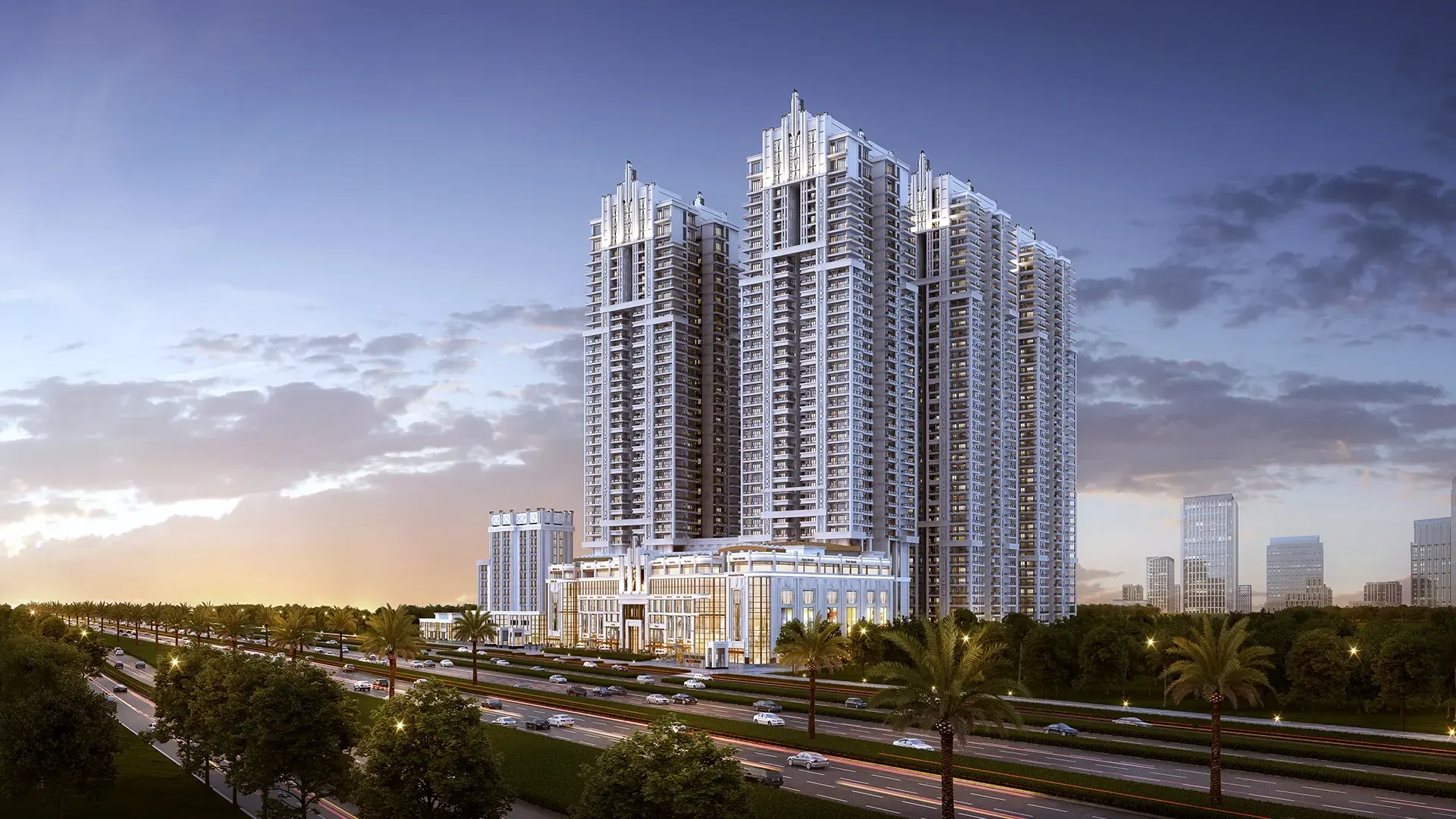
 Artistic Impression
Market
Dwarka Expressway in 2026: what has changed for buyers looking at Sectors 99 to 113
Dwarka Expressway property market, Gurgaon, in 2026: what changed in Sectors 99 to 113 since the road opened, and what it means at Hero Homes Palatial.
For most of the last decade, the Dwarka Expressway was a road people bought homes next to on the promise that it would one day open. That changed in March 2024, when the Haryana section and the Delhi stretch up to the Gurugram border were opened to traffic. The rest of the Delhi section followed in 2025. The corridor is now judged on how it works day to day, not on a map.
What the road actually connects
The expressway runs about 29 km from Shiv Murti on NH-48 near Mahipalpur to Kherki Daula at the Gurugram end. Roughly 19 km of that is in Haryana. The practical effect for a resident of the new sectors on the Gurugram side is a second route into Delhi and the airport that does not depend on the NH-48 stretch through Sirhaul, which was the city's main bottleneck for years.
Sectors on both sides of the road, broadly 99 to 113 and the new sectors near the Delhi border, were planned in the Gurugram Manesar Urban Complex plan well before construction began. That is why the corridor has so many large, recent group housing licences in one place. Sector 104, where Hero Palatial is being built, is on the city side of the corridor, closer to Old Gurugram and the railway station than the sectors further west.
Why prices moved
Prices on the corridor rose sharply between 2021 and 2025. Three things drove it. The first is the road itself, which removed the largest uncertainty buyers had priced in. The second is a shift in what was being launched: branded developers moved in with larger homes aimed at buyers who would otherwise have looked at Golf Course Road or Golf Course Extension Road. The third is the relative cost of land. Plots on the corridor were licensed at older prices, so developers could launch large-format homes at a discount to the established luxury addresses and still make a margin.
A buyer should keep one distinction in mind. Launch prices are asking prices. Registered sale deeds are what people paid. The gap between the two can be wide, especially for resale of homes in towers that are still under construction. Before treating any per sq ft figure as the market rate, ask to see recent registered transactions for the sector, which are available through the state's property registration records.
What is still to come
Several pieces of infrastructure that buyers hear about are not yet built. A metro link along the corridor has been proposed, and the Hero Homes material lists a proposed station about 500 m from the project. Proposed is the operative word. Until a line is sanctioned, funded and tendered, it should not form part of the reason you buy. If it arrives, it is upside.
The same applies to large commercial projects planned near the corridor, including the state's Global City proposal for a planned business district. These would bring jobs closer to the residential sectors, but timelines for projects of that size in Gurugram have tended to stretch.
The things that are here now are the road, the Gurugram railway station a few kilometres from Sector 104, and a growing number of occupied societies with schools and daily-needs retail following them.
How the corridor compares with older Gurugram
The main trade-off has not changed. Older Gurugram, and the Golf Course Road belt, have established social infrastructure: hospitals, schools with long track records, clubs and markets that have been running for twenty years. The corridor has newer buildings, larger homes for the money and wider internal roads, but its surrounding infrastructure is still filling in.
For an end user, the question is whether the daily routes you will use work today. For a family with children at a school in Old Gurugram, Sector 104 is closer than most corridor sectors. For someone commuting to Cyber City, the developer lists DLF Cyber City and Udyog Vihar at 12 to 15 km. Drive it at 9 am on a weekday before deciding what that means in practice.
What this means for a buyer at The Palatial
The Palatial sits in the upper part of the corridor's price range. The starting price of ₹4.80 Cr for a 3.5 BHK of 2,833 sq ft puts it alongside other branded large-format launches rather than the mid-segment towers built earlier in the decade. That has two consequences.
First, compare it with other large-format projects, not with the average sector rate, which mixes in smaller and older stock. Compare unit sizes on the same basis, carpet area where possible, and compare what is included in the quote.
Second, the resale market for homes above ₹4 Cr is thinner than for homes around ₹2 Cr. There are fewer buyers at that level at any one time. If you may need to sell within five years, factor in a longer selling period.
None of this makes the corridor a better or worse place to buy than it was. It means the case for buying has moved from road speculation to the usual questions: developer track record, the specific building, the price relative to comparable homes and your own commute. For the first of those, see our note on Hero Homes. For the building itself, start with the configurations and specifications.
Brochure
Get the Brochure and plans
Share your number and we will send the developer's brochure, the current price sheet and the HARERA details for the tower you are considering.
Or call +91 93553 02055